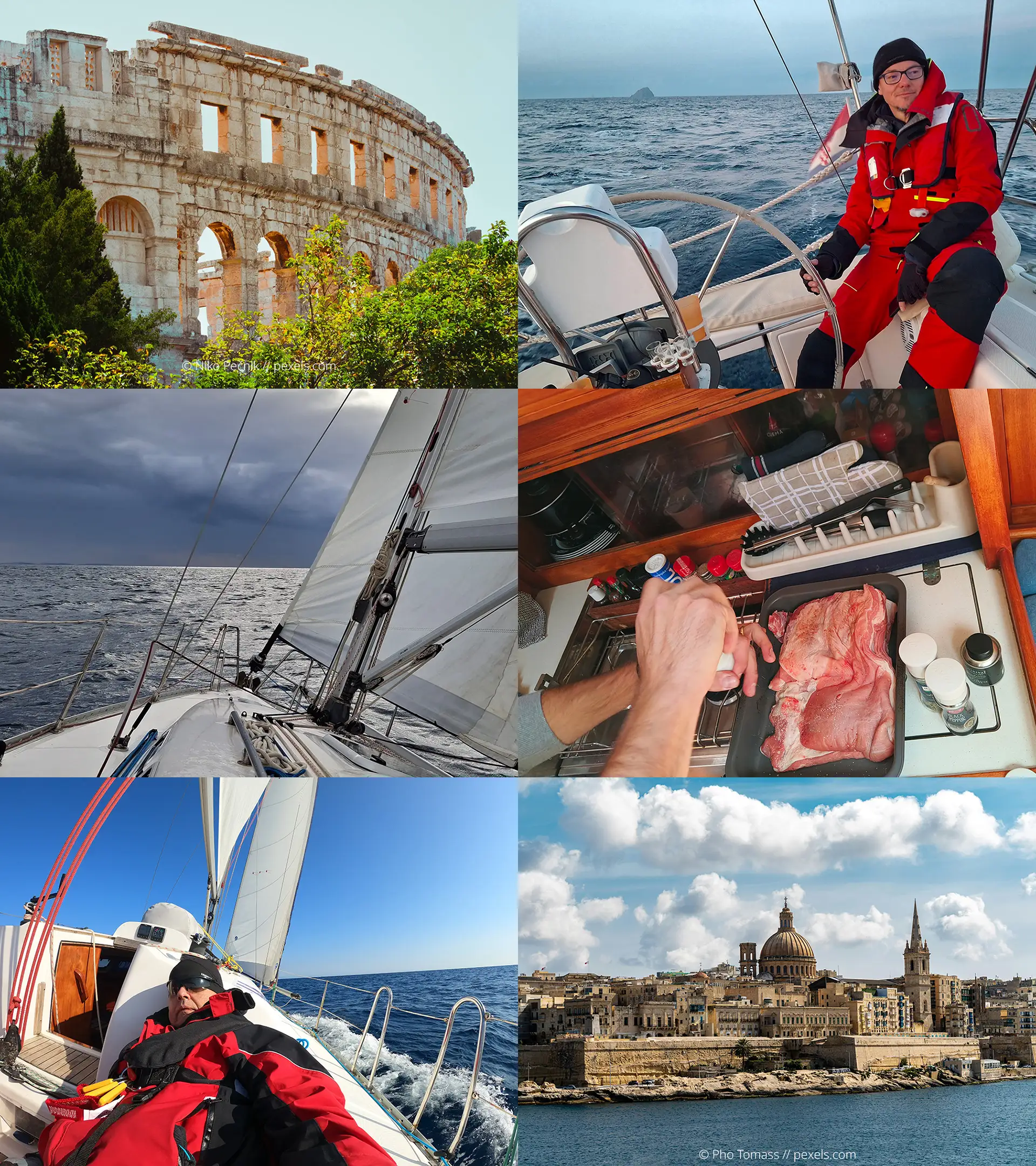
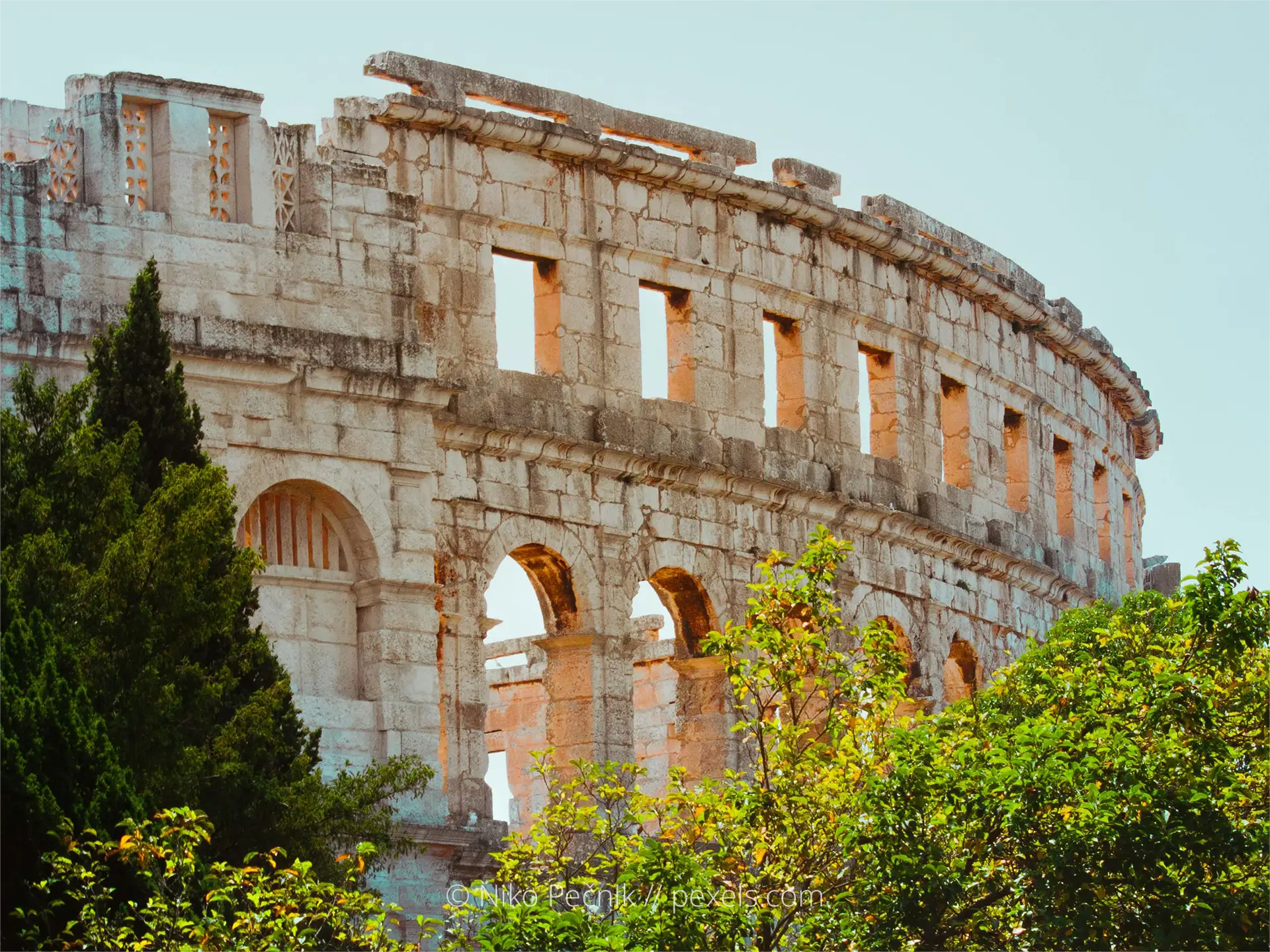
 Departure from Pula: We depart Marina Veruda and head south through the Adriatic,
leaving the Croatian coast behind. This is a classic down-sea route, requiring careful weather
routing to harness the prevailing northerlies while avoiding the unpredictable Bora winds
descending from the Velebit mountains.
Departure from Pula: We depart Marina Veruda and head south through the Adriatic,
leaving the Croatian coast behind. This is a classic down-sea route, requiring careful weather
routing to harness the prevailing northerlies while avoiding the unpredictable Bora winds
descending from the Velebit mountains.
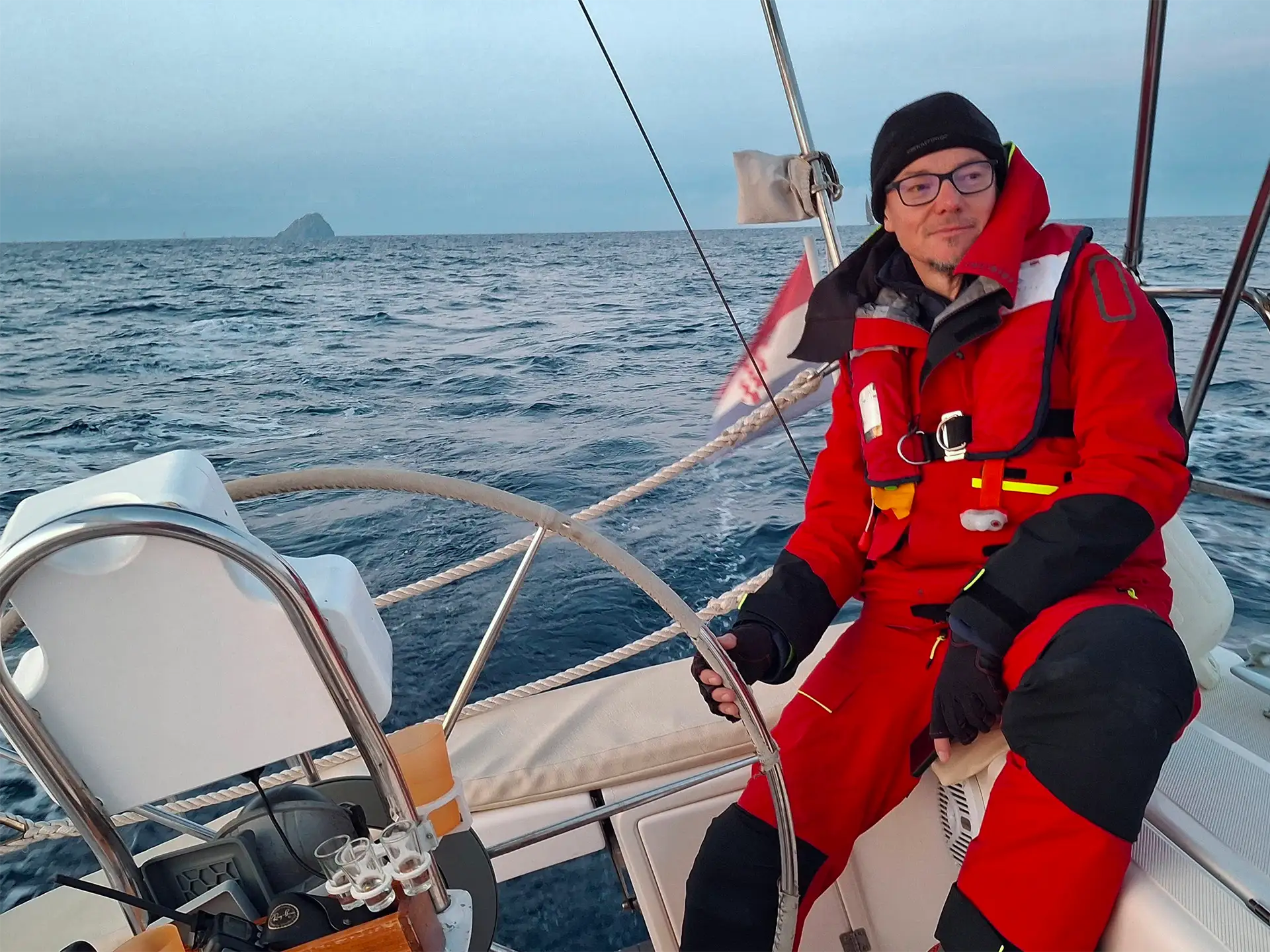 The Adriatic Canyon: The central Adriatic is a surprisingly deep basin — our route
crosses the Palagruža Sill, the deepest point of the Adriatic. This is offshore sailing in its
purest form: no land in sight, no shelter available, only the discipline of watchkeeping and
weather routing.
The Adriatic Canyon: The central Adriatic is a surprisingly deep basin — our route
crosses the Palagruža Sill, the deepest point of the Adriatic. This is offshore sailing in its
purest form: no land in sight, no shelter available, only the discipline of watchkeeping and
weather routing.
 The Strait of Otranto: The gap narrows between Italy and Albania to just 72 km.
This is a crucial tactical juncture where wind and current compress, and the convergence of the
Adriatic and Ionian creates challenging sea states. Crossing the busy traffic separation scheme
demands vigilance.
The Strait of Otranto: The gap narrows between Italy and Albania to just 72 km.
This is a crucial tactical juncture where wind and current compress, and the convergence of the
Adriatic and Ionian creates challenging sea states. Crossing the busy traffic separation scheme
demands vigilance.
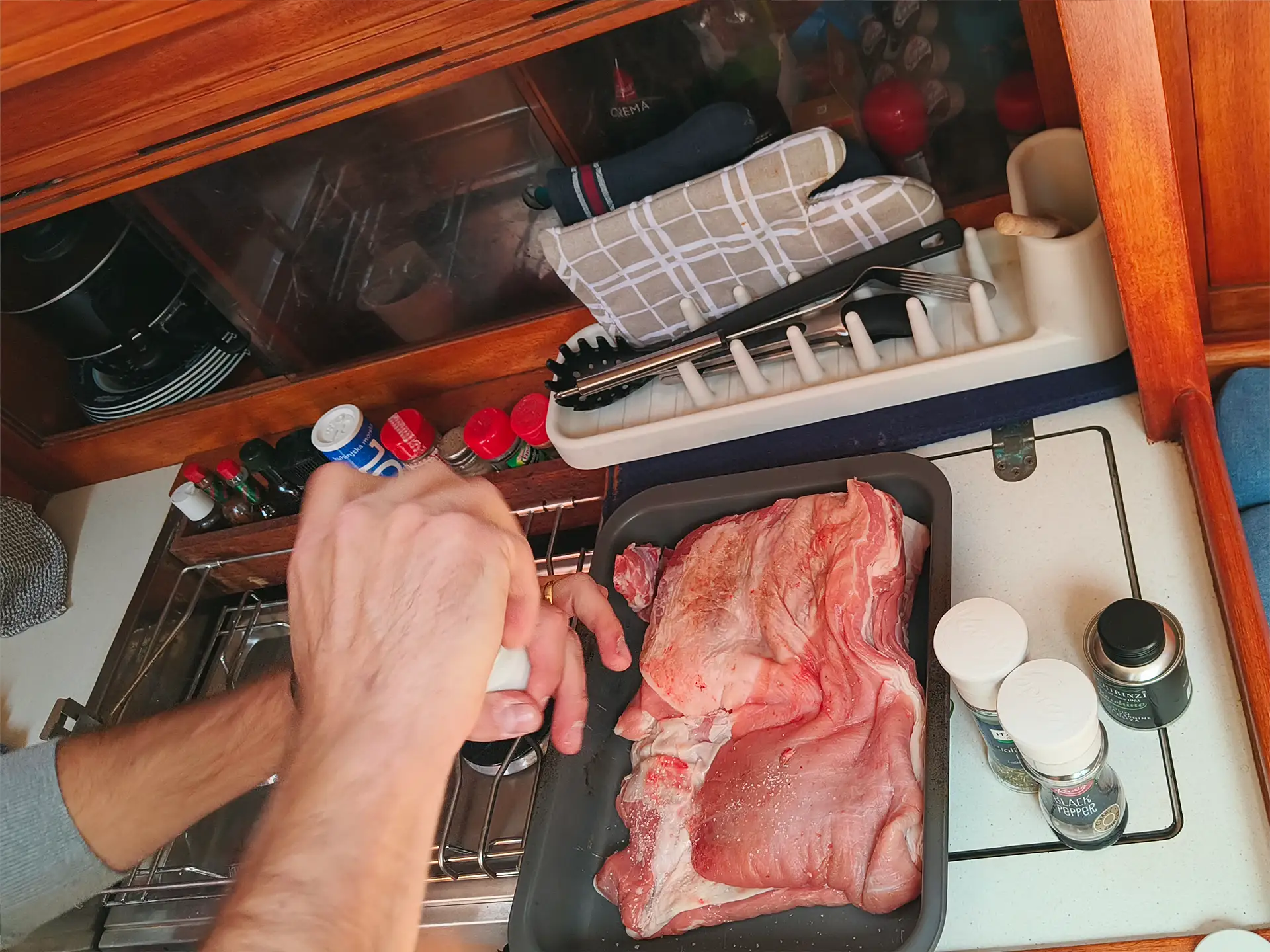 The Ionian Crossing: Exiting the Adriatic, we enter the deeper waters of the Ionian
Sea. This open-water leg demands precise navigation and enduring focus as we set a direct course
for the Maltese archipelago.
The Ionian Crossing: Exiting the Adriatic, we enter the deeper waters of the Ionian
Sea. This open-water leg demands precise navigation and enduring focus as we set a direct course
for the Maltese archipelago.
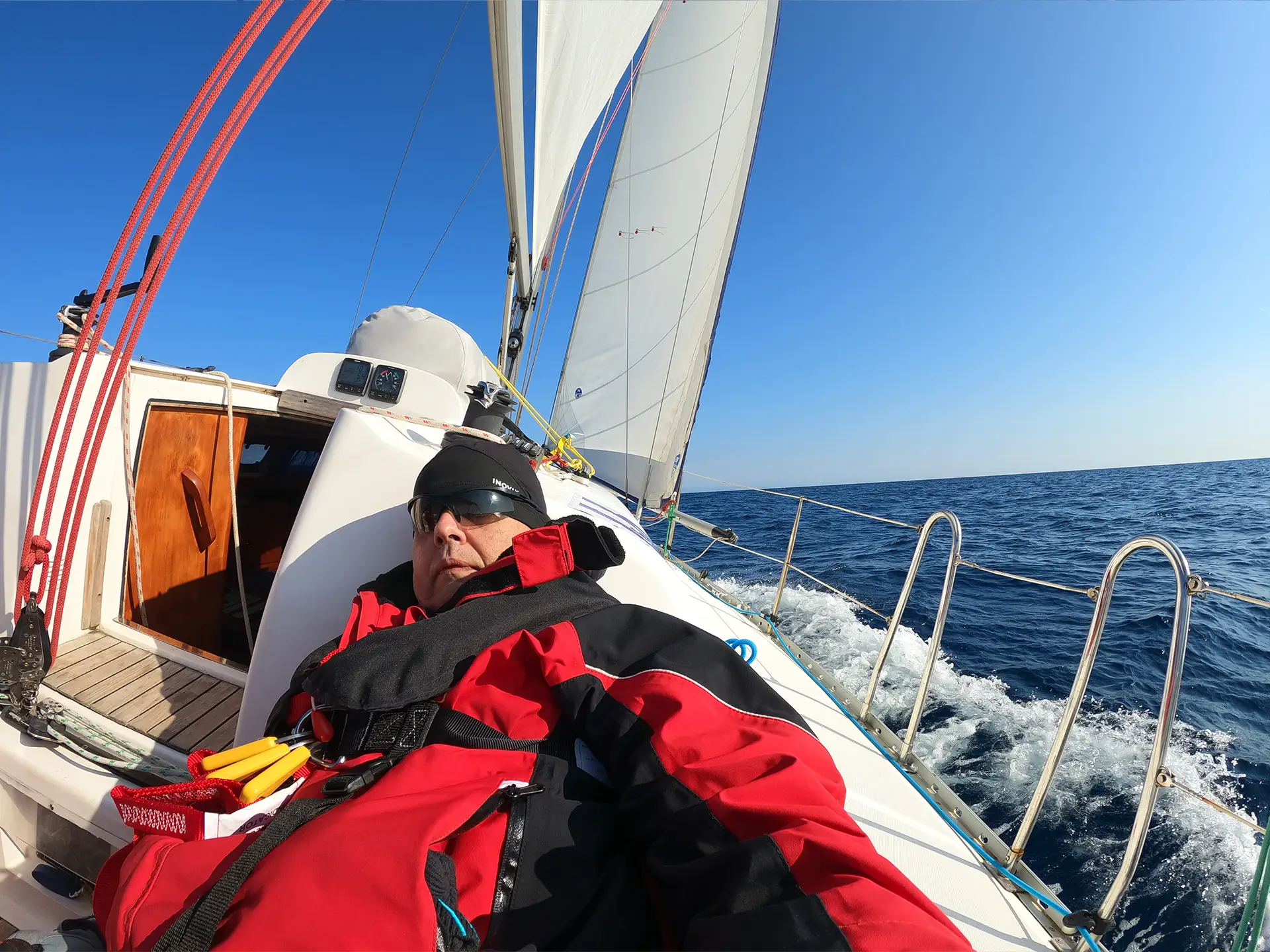 Night Passages: The crew operates in a traditional watch system, managing the boat
24/7. This means preparing meals at 15 degrees of heel in the dark, performing sail changes on
pitching bow decks, and learning to sleep when you can — the fundamental offshore skills that
separate coastal sailors from blue-water navigators.
Night Passages: The crew operates in a traditional watch system, managing the boat
24/7. This means preparing meals at 15 degrees of heel in the dark, performing sail changes on
pitching bow decks, and learning to sleep when you can — the fundamental offshore skills that
separate coastal sailors from blue-water navigators.
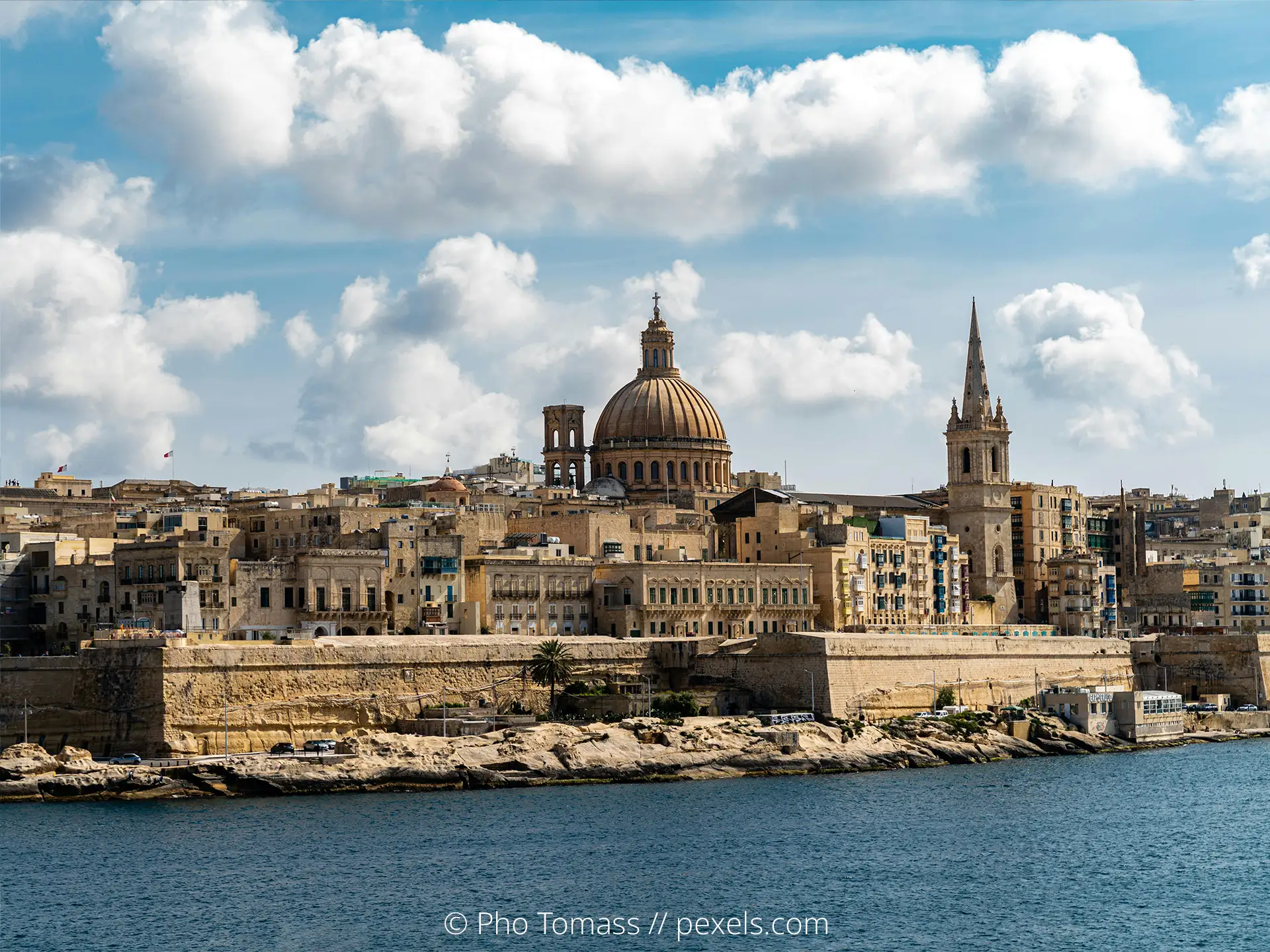 Grand Harbour, Valletta: Arrival beneath the golden, towering bastions built by the
Knights of St. John is a dramatic conclusion. Sailing into Grand Harbour, you join the
international fleet preparing for one of the world's most prestigious offshore races — the Rolex
Middle Sea Race.
Grand Harbour, Valletta: Arrival beneath the golden, towering bastions built by the
Knights of St. John is a dramatic conclusion. Sailing into Grand Harbour, you join the
international fleet preparing for one of the world's most prestigious offshore races — the Rolex
Middle Sea Race.