The Logbook
Notes from the Captain's Log: Offshore Adventures, Technical Insights, and Life at Sea.
Veruda's adventure in Malta
The Veruda Sailing School team has successfully returned from Malta. How was it for them, what they did, what they experienced, who they hung out with... read below:
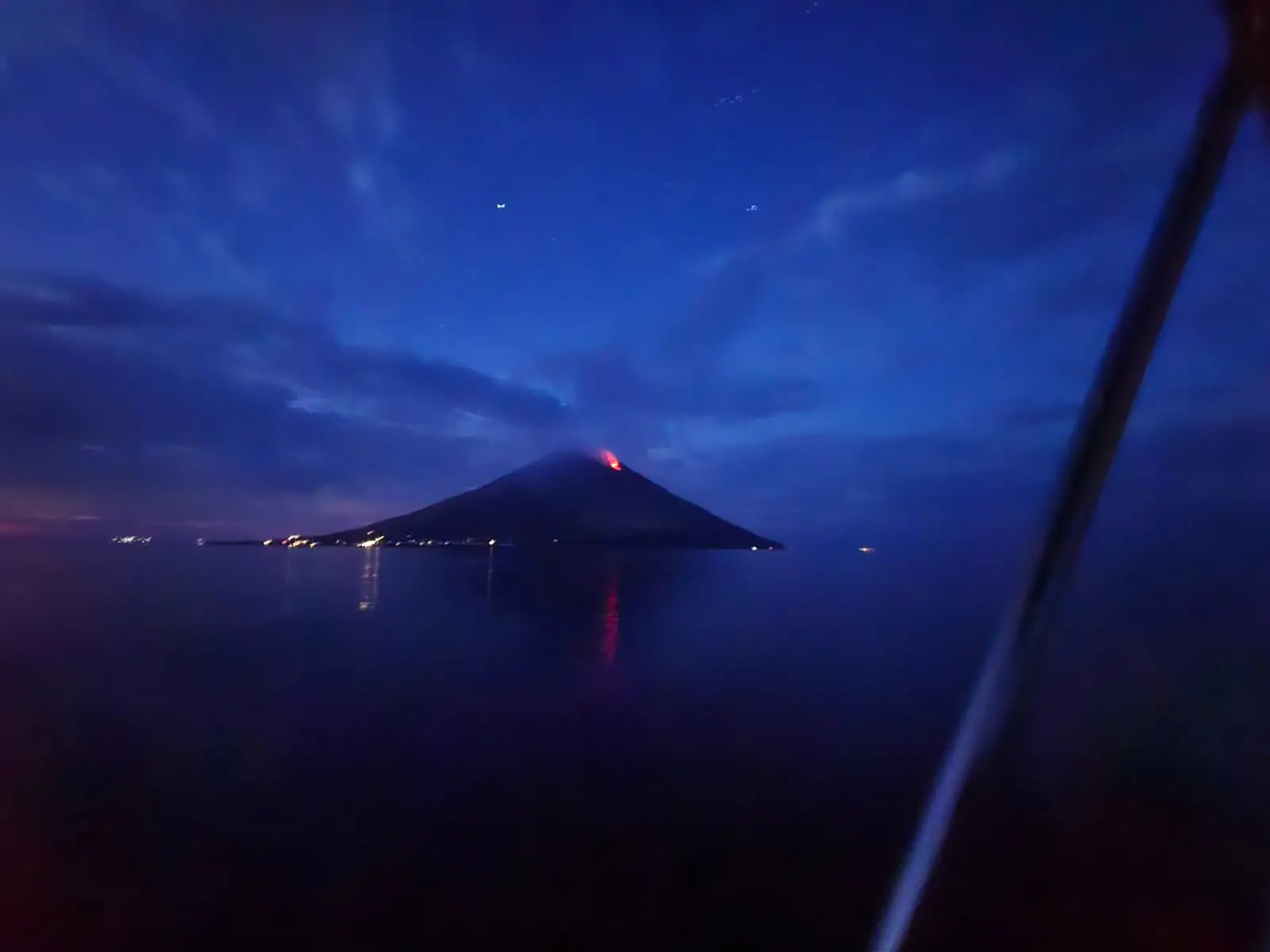
From the "Pannonian Sailor" to the Stromboli volcano and back: 2,300 miles of pure offshore essence
They say that a sailor is not born, but forged at sea. However, the story of Robert Šarić, affectionately called the "Pannonian Sailor" by the media, proves that a love of the open sea can be born far from the salty air, in the heart of the continent, and then blossom into a passion that moves people and ships thousands of miles away.

This is the story of the sailboat "Buri", a small Elan 333 from Pula, which dared to sail with the giants in the Rolex Middle Sea Race (RMSR), and of the crew that experienced in a month what others take years to do.
Act 1 - How a passion for sailing led the "Pannonian Sailor" to the Rolex Middle Sea Race
In modern sailing, there is a clear distinction between inshore regattas, which are often tactical sprints within sheltered waters, and offshore sailing, which requires complete autonomy of the crew and vessel on the high seas. The Rolex Middle Sea Race, with its 606 nautical mile circular route around Sicily, is the "Holy Grail" of Mediterranean offshore sailing. Unlike transoceanic routes characterized by stable trade winds, the RMSR is known for its unpredictability, complex wind-influencing features, and navigational pitfalls.
For Robert Šarić and the "Veruda Sailing School" team, this project was not just a sports competition, but the culmination of many years of work on the education and promotion of sailing. The project called "Adriatic Odyssey" and the subsequent appearance at the regatta symbolize the transition from the comfort zone of the local waters to the arena of the world's nautical elite. This report documents how the passion of the "Pannonian Sailor" was transformed into a tangible result despite technical limits and dramatic circumstances at sea.
The heart of this endeavor is the school. Unlike professional teams where each member is a paid specialist (bowman, tactician, helmsman), the crew of "Buri" is an alloy of enthusiasts and students led by a mentor. I use RMSR as the ultimate classroom. The concept is clear: the theory of navigation is learned in the classroom, but seamanship is forged exclusively at sea, in conditions of sleep deprivation and physical exertion.

"Adriatic Odyssey" began in Pula, on October 7, with a departure from Marina Veruda. The route to Malta, ultimately 736 miles long, was not just a transfer for our participants Igor and Jernej; it was their longest non-stop offshore leg of their lives. In those few days of isolation, while the mainland became just a memory, strangers became crew, and crew became friends. There, in the cockpit of "Buri", plans were made for some future, joint conquests of the sea.
Arriving in Valletta was a collision of worlds. Our little "Buri" found itself in the company of the fastest boats on the planet. The rest of the fleet representing Croatia was also there – the legend of Croatian offshore racing Ivica Kostelić on his new "Amelicora" and the crew of the sailboat "Mr. J" with the seasoned tactician Darko Prižmić - Prižm for whom this was his fifteenth RMSR.
Meeting Ivica was one of the highlights, even before the starting gun. We met through mutual acquaintances and "clicked" at first. The next day the skies over Malta opened up, the downpour was biblical. In the "Buri" salon, with a superb meal prepared for us in the cramped ship's kitchen by chef Jernej Serk (who, among his many professions, teaches others to cook on sailboats), Ivica joined us. In addition to stories from his adventurous sporting life, Ivica also gave us some key tips on software route planning based on weather forecasts and the best weather models for the regatta area. Ivica, a man synonymous with perseverance, was thrilled by my sailing school concept - a focus on shorthanded and solo sailing, on demystifying the ocean in order to empower the "ordinary" man. That recognition, from someone who has sailed the world's toughest seas, gave me the wind at my back that I needed before the start.

Act 2 - From the Man on the Mast to the Fire of Stromboli - 782 miles of epic Odyssey in the Rolex Middle Sea Race
It all started with drama. As we prepared for the start in Malta’s famous Grand Harbour, five minutes before the cannons were fired, we realized that the mainsail was stuck in the mast. There was no way out. Without hesitation, crew member Tom flew to the top of the mast. We crossed the starting line literally with a man hanging from the top of the mast - 15 meters above the deck, waving and taking photos of the competition, while we unfurled the genoa below him. It was a memorable sight and a clear sign – this was no ordinary regatta!

The first night brought unstable weather, exactly as the briefing had predicted. After a moderate wind and then a calm, a strong northeasterly wind blew at over 20 knots early Sunday, raising unpleasant and rough seas. Our crew member, Beatrice, had been struggling with severe seasickness all day, and exhaustion and dehydration were taking their toll. Her condition was not improving.
We faced the most difficult decision: continue the regatta or help our colleague. We contacted Race Control. The rules are clear: stopping means giving up the race, but since it was an urgent medical reason, we were given permission to temporarily pause the regatta and, after taking care of Beatrice, we could rejoin at the same place. After Beatrice was taken care of, the regatta officially resumed. Losing a crew member in the middle of a regatta is a severe blow to morale and logistics, but the sea does not ask for justice.
After continuing to battle rough seas for the rest of the day, and after a night of floating and a morning of (naked) swimming, pure sailing magic happened off Messina. At exactly 9am, as the tide turned in our favour, a perfect southerly wind blew. We hoisted the spinnaker, easily overtook the "Blue Horizon" - a 47-foot racing boat - and literally raced through the entire Strait of Messina - that "infamous" corridor full of ferries and tugboats. With a 15 knot wind and a 1.5 knot current pushing us along, it was perfect timing and a passage for the annals.
Sailing along the beautiful volcanic Aeolian Islands was a treat for the senses, but the welcome we received from Stromboli was unique. Sailing at night alongside an active volcano spewing lava into the sky is a sight that erases fatigue and reminds us of the raw power of nature that surrounds us sailors – on one side the sea thousands of meters deep, on the other fire from the bowels of the earth.

As the days passed, the equipment began to show signs of fatigue. On the morning watch, I noticed a broken thread on the lower right shroud (D1). Shrouds are steel cables that hold the mast upright and prevent it from bending or breaking. The D1 (D=diagonal, 1=lower) attachment is crucial for stabilizing the middle part of the mast. A broken thread is a sign of material fatigue ("fatigue"); when one breaks, the others follow in a chain reaction because the remaining threads are under greater strain.
That night, three more threads broke. We knew we were in trouble; the mast was in danger, and we still had a third of the way to go, and I was faced with a dilemma: give up and motor to the nearest port (which is still risky with an unstable mast) or try to repair it in the open sea and continue. We launched a rescue operation: we released the tension, released the load, and improvised a Dyneema safety support. We sailed with our hearts in our hands, hoping that it would hold out and continue to Lampedusa in a somewhat "conservative" orca, guarding the ship.

Nakon što smo okrenuli Lampedusu – taj najjužniji otok u regati, okrenuli smo brod na drugi bok, a samim time i prebacili opterećenje na ispravne sartije, te na istom boardu s vjetrom u pola krme nastavili sve do Malte. Iako smo veći i brži brod "Blue Horizon" prestigli još kod Mesine i zadnjih 400 milja nas nisu uspjeli ponovo proći, u toj zadnjoj etapi od Lampeduse opasno su nam se približili. U 1 ujutro, nakon provlaćenja u kanalu između Comina i Malte uz vjetru koji je umirao, za zadnji sprint do cilja oboje smo digli spinakere. Bio je to pravi "match race" u mraku. Okrenuli smo zadnju bovu doslovno njima "ispred nosa" iu napetoj borbi na zadnjim daškovima vjetra, uspjeli ne samo obraniti poziciju već i povećati prednost. U 4:15 ujutro nakon nakon 782 milje stvarne plovidbe prešli smo liniju cilja, pobjedonosno završivši ovu epsku avanturu. Tired, salty, but immensely proud.

Act 3 - Returning Home
After the regatta and the broken cable that we replaced with a new one on Monday, my Maltese adventure (as well as the hospitality of the hosts that we took advantage of to excess) was coming to an end. We postponed the planned departure to Tuesday, October 28th, waiting for the strong northwesterly (NW) to calm down. The new crew that joined the "Buri" a few days ago was ready to go: Lindsey, for whom this was her first real offshore experience, and Viktor, a seasoned offshore fox who had already "beaten" non-stop routes with me.
After departure, our first destination was Sicily. We docked at the waterfront on the island of Ortigia (Syracuse), where after a night's rest, we took advantage of the beautiful autumn morning for a sightseeing tour and lunch in the historic center of the city.

We decided to make the next section more challenging, that is, skip a few stops to have more time for tourist exploration of the Italian interior, so we decided to make Bari our next stop.
Lindsey, who was leaving us in Baria, decided to take a vacation, so the male part of the crew started absorbing impressions of the local culture. In a busy day, we visited pearls: Polignano a Mare, Alberobello, Matera, and in the evening we visited the historic center of Bari.

After saying goodbye to Lindsey, the last leg took Viktor and me to Croatia, more precisely to Vis, where Viktor would catch the ferry to Split and save himself some time, and me some time. After setting off and skipping refueling (due to the mild shock of the diesel price of 1.93 EUR/L), we sailed down the jugo until a few miles before Vis, where it died down and left us with a wave to remember. Although there were only two of us on the boat for the last 24 hours, the section passed in routine three-hour guards, fine food, and pleasant company of friends and sailing enthusiasts.
After refueling (1.33 EUR/L, thanks INA), the rather empty Vis harbor left us with a handful of mooring options and we chose alongside the waterfront, so I guess we're with the Rolex Middle Sea Race!
All partings are a little bitter, but we are both sure that we will meet again in a joint sailing, so that brings a smile back to our faces, and the powerful Petar Hektorović, restraining his strength in the shallow port of Vis, takes Viktor to Split and his loved ones.
I spend my afternoons on Vis doing detective work – where does the water in the bilge come from? I only discover the culprit at 1 am at the anchorage in front of INA, where I escaped from the Tramontana wind that was dangerously pushing the ship onto the quay. The vacuum valve after the water pump "peeped", filling the ship at a rate of 10-20 liters per minute. In the morning, after a telephone consultation with a mechanic from Pula, I bypass the valve and make a decision: I'm heading on to Pula, solo of course, but I'm still bothered by why the salt water wasn't going through the heat exchanger at full speed and was coming out of the vacuum valve.

When I set off in the morning, I briefly toyed with the idea of sailing those last "small" 150 miles in one piece. But the forecast was relentless – favorable winds only until the afternoon, and then a strong maestral right in front of me that would "follow" me for several days. That would mean 300+ miles of sailing and at least 48 hours of solo suffering. I decided on a wiser approach with anchoring overnight, and I had plenty of time until the weekend and a birthday spent with my family.
For the next few days I struggled with the mistral, calms, and the engine, which was now overheating after only 5 minutes of operation, limiting me to traveling only when there was wind. The end of the road and my family now seemed further and further away.
Waking up at 3 am – calm. At 4 am – calm. And then I had a crazy idea while waiting for a storm. By analyzing every part of the engine's cooling system (at least as far as I understood and could analyze it), I realized that I had no antifreeze, so I poured plain water into the cooling system, hoping for the best. Luck favors the brave – the engine lasted half an hour, and since the bora stayed asleep, I set off from the anchorage in Sakarun with my fingers crossed. Although I hoped that the bora, which was supposed to blow a nice 25 knots, would come any minute, it only appeared halfway through Kvarner, and at a tame 12-15 knots when I happily spread the sails and finally turned off the engine. But at least the engine lasted 10 hours without a break! With beautiful sailing on a crisp autumn afternoon, I reached the starting point of the journey - the Verudela peninsula in Pula.

Exactly one month after departure, on November 7th at 4pm, I tied up at my new berth in Marina Veruda. The circle of 2300 nautical miles was closed. The emotions of returning home after so many miles, after the volcano, the regatta with five crew members (and all their belongings) and later the (welcome?) emptiness of the ship and the beauty of solitude at sea, are difficult to describe in words.
A big thank you to all the participants who have placed their trust in me and Veruda Sailing School, as well as my partners, Marina Veruda and Premium Yacht Insurance, who support such daring ventures. The participants' reviews unanimously highlight the exceptional expertise, calmness and pedagogical approach of the instructors, emphasizing how the top-notch organization and focus on safety provide ideal preparation for the most demanding offshore challenges such as the Rolex Middle Sea Race. This is exactly what encourages and motivates us to invest even more effort in our story in the future.

Epilogue: Hang the rudder on a peg or lead on into new challenges?
This odyssey is over and 2025 is still a little behind us, but what a year it has been, as if a few have passed since that first course of the year at the Veruda Sailing School back in January!
From the winter winds of Palagruža to the legendary Rolex Middle Sea Race, we haven't just pushed the boundaries of offshore education - we've redefined them.
We have set a new standard for maritime education in the Adriatic, establishing Veruda as the only school in the region that consistently completes non-stop offshore routes of over 600 miles with crews of trainees. We go where others don't.
- 5,000+ nautical miles sailed
- 19 advanced and expert course participants from Austria, Croatia, Cyprus, Greece, Hungary, Israel, Slovenia, the United Kingdom and the United States joined our crew
- Major expeditions undertaken:
- The Ultimate Adriatic Challenge (Palagruža)
- Offshore to Glory: La Cinquecento
- Pula-Malta Offshore Adventure
- Rolex Middle Sea Race
- Adriatic Discovery: Malta-Pula
In 2026, we plan to empower new crews again and take them on the challenge called RMSR, as well as many others. That is the core of what we do – empowering people to understand that for offshore and for world-class regattas, they don't need superyachts and professional crews of ten, but knowledge and will.
Whoever dares to dream, contact them via this link. The open sea awaits!
See the original article (in Croatian).
Escape the Mediterranean: The Winter Challenge
Three consecutive, high-stakes offshore expeditions from the Adriatic to the Canary Islands.
Step aboard for a single masterclass leg or conquer the entire winter crossing.
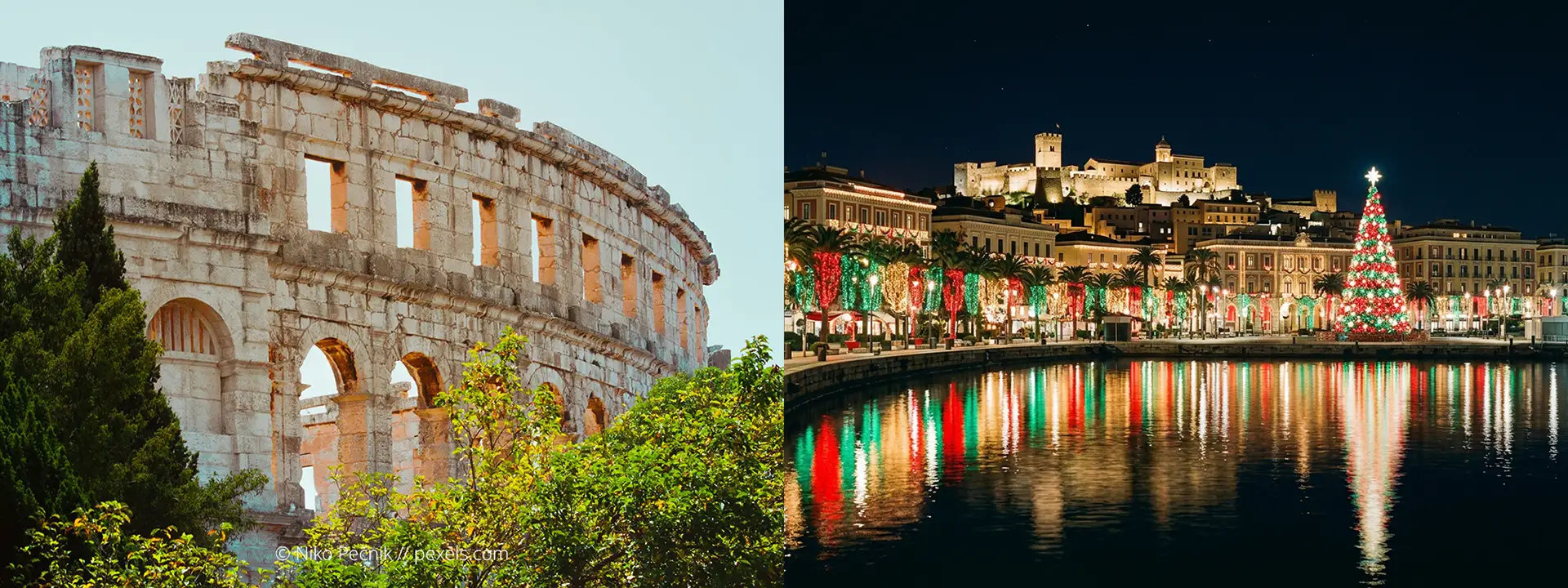
The Three Seas Expedition
3 intensive passage stages with tactical Italian stopovers in historic Otranto and Reggio di Calabria, finishing for Christmas in Cagliari.
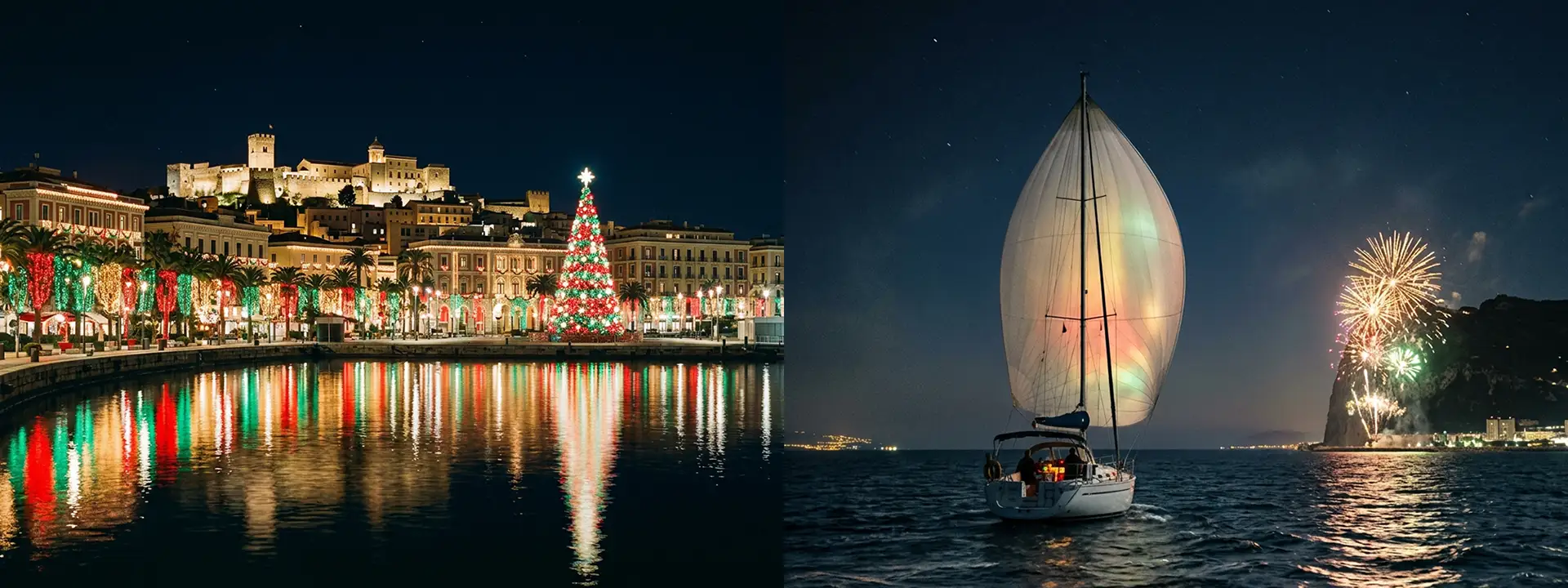
The Final Push Outwards
Beat westward across the open Western Med against winter lows and Atlantic inflow currents. Ring in the New Year beneath the Rock of Gibraltar.
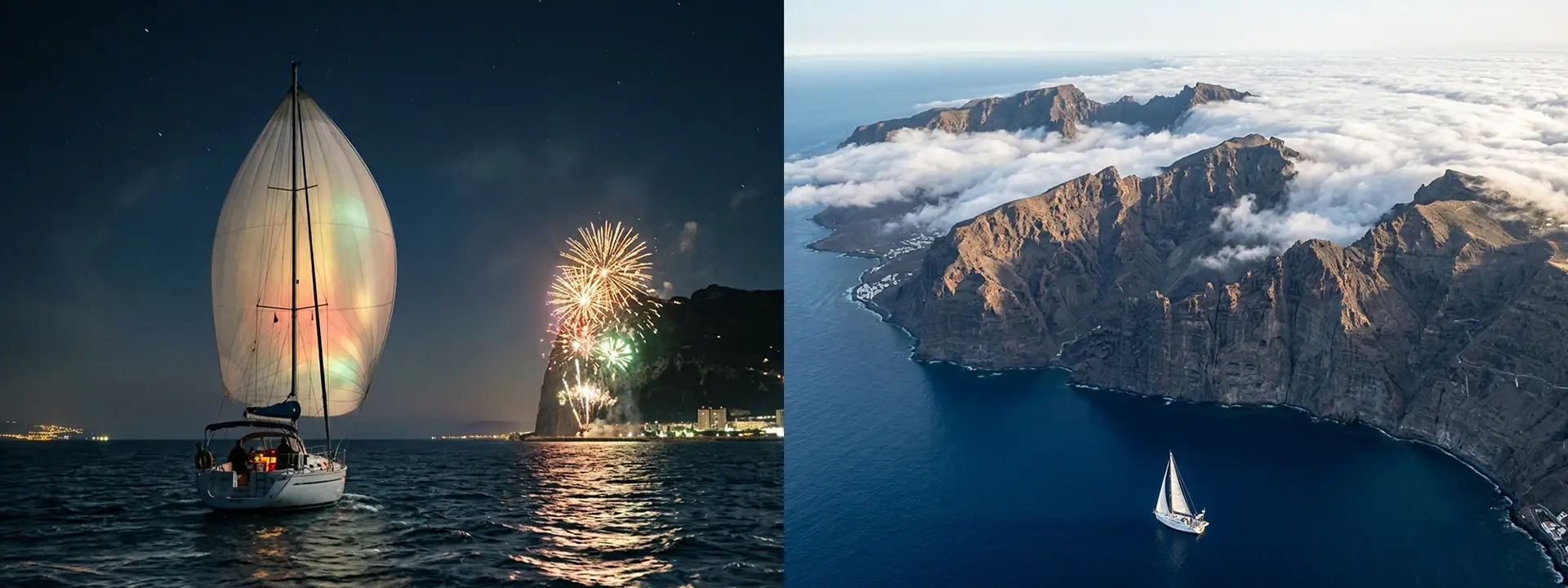
The Atlantic Threshold
Break out through the Strait into the open North Atlantic, surf long ocean swells down the African coast, and make landfall in the Canary Islands.