The Logbook
Notes from the Captain's Log: Offshore Adventures, Technical Insights, and Life at Sea.
Interview: "Pomorska večer" (Maritime Night) show, HRT Radio Pula
Transcription of the audio recording of the radio show "Pomorska večer" (Maritime Night) on Radio Pula from February 16th, 2026
Scroll down for Croatian (original)
Dorina: Dear enthusiasts of "Pomorska večer" (Maritime Night), my guest today is the Pannonian sailor, Robert Šarić. Robert, good evening and welcome.
Robert Šarić: Good evening Dorina, good evening to all sailors and listeners. I must thank you for this invitation to "Pomorska večer," and for following us and inviting us previously to "Plavi val" (Blue Wave), where we had live check-ins both before departing for Malta and during the regatta itself. It meant a lot to me that you followed us like that.
Dorina: That’s lovely. It means a lot to us as well to be in the right place at the right time. Namely, Robert, you participated in a Middle Sea Race in the Mediterranean, and registration for the new one is opening soon—though the race itself takes place this autumn.
Robert Šarić: That’s right, yes. As soon as the last regatta ended, I knew I would go again the following year—meaning this year. Our boat is almost fully booked with applicants; we are just waiting for the organizer to officially open registration so I can sign up, which will be in April. Malta is something that changes a person. That Rolex Middle Sea Race is truly an experience of its own. I would recommend it to anyone who has a bit of an adventurous spirit; to treat yourself to that feeling is something unique.
Dorina: Robert, perhaps for those who love the sea but aren't deeply involved in sailing, could you describe what that kind of sailing is like? What kind of regatta is it, and what was the boat you sailed—the one you’ll be on again this autumn?
Robert Šarić: The Middle Sea Race was a real challenge, especially for a team, crew, and boat like ours representing the Veruda Sailing School. The budgets people work with there are professional; world-class crews come in, while we are a small boat—an Elan 333, 10 meters long. It’s a performance cruiser, almost a family cruiser you could say, and we had to raise that boat and its safety to a truly world-class level—not just in terms of equipment, but also in the crew's handling skills and qualifications to get there. Various certifications, courses, and so on. It’s very good for sailing because it raises awareness among people and crews about things that are vital, because "the devil never sleeps." We all think it will be beautiful—we are all optimists—but storms can catch you; unexpected things happen. We don’t have orcas in the Adriatic yet, but anything can happen regarding boat damage, and you have to know how to act at the right time, without panic, in the fastest and best way.
Dorina: Right, and you also had to stay informed via satellite; you mentioned the currents to me, and what else?
Robert Šarić: Yes, we touched upon Copernicus, the European satellite system. I used it to prepare the navigation for the regatta itself as the leader, skipper, and navigator, because this was a sailing course. I am responsible not only for the crew and the boat but also for our result and for ensuring people learn how these things are done. Copernicus is a system that monitors the Mediterranean via satellite—changes in water, salinity, and everything else scientists track. But what was extremely interesting to me as a sailor were certain currents, like the main Atlantic-Ionian stream that passes above Sicily—how they shift depending on the time of year and how to adjust tactics and navigation to those currents to achieve an ideal result.
Dorina: Real maritime work.
Robert Šarić: Listen, that’s one of the things that makes sailing interesting and beautiful—it’s actually a very cerebral sport. There is a lot of thought involved, and these offshore regattas especially require that kind of tactic and preparation.
Dorina: This upcoming, or rather this year's Rolex Middle Sea Race, will it be held in the same place again?
Robert Šarić: That’s right—same place, same time. I believe the start date is October 18th. Last year it was the 17th, so the same time of year. Wonderful conditions in Malta; it’s summer there then—the sea is about 28 degrees, and the air is 25-26. A beautiful regatta, but challenging because anything can happen that time of year. And it did. And that’s what we look forward to. The Tramontana in the Strait of Messina—it’s a wonder what kind of waves form there against that current. And then the calms after that... you have to endure those calms psychologically. And then tactics again: you’re melting, the current is pulling you back. Stunning visuals of active volcanoes—we had an eruption of Stromboli at dawn. That lap around Sicily offers beautiful vistas, and all while you are competing, with hundreds of other crews next to you experiencing the same problems. We didn’t have any catastrophic issues, but we had some concerning ones. Equipment takes a beating, but everything must be solved on the fly. And our small team somehow managed in that fight against the giants. You can do it even with small budgets.
Dorina: And to reiterate, results matter, but coming back in one piece is paramount. This is primarily a regatta where you teach your crew members; they are students of your school.
Robert Šarić: Yes, after so many miles through the years, the challenges of the sea and various winds don't worry me as much as the encounter with different people. On Malta, I had five people: one from America, England, Greece, Cyprus, and Austria. Individually, they all have some experience, which is a minimum requirement to enter such a regatta. I don't accept someone for such demanding races who has just started sailing. But it’s a different story when a few friends sail together for years and then find themselves there with people they don't know, whose names they don't know, on a boat they don't know. But it can all be done; we have a defined process for how they enter, how they are trained. Everyone progressed, and everyone was extremely satisfied with both the result and the experience—what they saw and learned.
(Music break)
Dorina: For those who have just joined us, I am introducing my guest—I like to call him this, and he doesn't mind; in fact, he is very pleased when I call him the Pannonian sailor—Robert Šarić, owner and head of the Veruda Sailing School from Pula. What we’ve already discussed is over, you can’t hear it now, but let's move forward. Let’s head from autumn back into summer. What will you be doing this summer? I hear it’s quite dynamic for you.
Robert Šarić: Oh yes. First, to reflect on that title—I am proud of my roots from Osijek and the Pannonian Sea that used to be there. And I suppose I am a sailor because a sailor is anyone who loves the sea and spends their time on it. I want to pass that on to people through my sailing school—to encourage them to become independent so they can enjoy it. For this summer, right in the middle of the season, we’ve organized a similarly demanding regatta: the Aegean 600, the so-called "Greek Rolex." This will again be a school, a sailing course. It’s also 600 miles like the Rolex on paper, but you sail a bit closer to the coast as you slalom between those beautiful Aegean islands. However, the Meltemi wind is very demanding there at that time of year.
Robert Šarić: I haven't been to Greece, so it’s a challenge for me. But I’ve talked to people who have sailed that regatta and have been there at that time of year. They say the conditions are technically tricky because they require constant readiness; the wind can go from a dead calm to thirty or forty knots in an instant. In the middle of the sea. So it’s not like a thermal wind where it drops—like when you pass Banjole and the Bura blows harder... You don’t know where that wind is coming from in the middle of the sea; it just starts blowing from zero. So, you have a spinnaker up, and then you see what happens to that spinnaker at thirty knots. That, I think, is the trickiest part of that regatta. Plus, navigation through some twenty or thirty turns. At the Middle Sea Race, it was nice—one big circle around Malta and those few islands; you just leave them to the left or right, pass through this passage. But on this one, I think the start is on July 5th or 7th. Beautiful weather, Greece, islands. A slalom between islands, starting below the Temple of Poseidon on a cape that is a truly spectacular sight. I believe it will be a regatta to remember. But besides that, since the theme is Greece, we’ve organized themed courses to Greece. From Pula to Sounio, where the marina is, and for the return journey—following the paths, or rather the wakes, of Odysseus and Jason and his Argonauts. And we know that the Argonauts, fleeing with the Golden Fleece, founded the colony of Polai right here.
Dorina: Pula.
Robert Šarić: Exactly. Our approach is always personalized, but for certain types of courses, like this one from Pula to Greece where we will pass through the Corinth Canal and stop only in a few places like Vis and Corfu, there is a higher level of difficulty. It’s not for beginners, but we adapt the legs so that people with a wider range of knowledge can participate.
Dorina: A whole month. For our previous conversation about the Rolex Middle Sea around Sicily, we were accompanied by music from that part of the world. Now, a bit of Sirtaki would fit perfectly. Shall we take a little break and immerse ourselves in what awaits you this summer?
Robert Šarić: Thank you for that. I believe we will have a Greek, a local, with us on the regatta. Greeks are wonderful people; I had two—one Greek and one from Cyprus—on the Middle Sea Race, and they are just as passionate and love sailing.
(Music break)
Dorina: The third part of our small night talks with the Pannonian sailor Robert Šarić, who announced he will be at the Middle Sea Race again this autumn, and will experience a similar regatta with his students from Veruda Sailing School in Greece. And here we are in spring; we can say that Robert Šarić and his team are preparing and will be the only boat from Croatia and Pula at the World Championship in Italy.
Robert Šarić: Specifically, that is the ORC (Offshore Racing Congress) World Championship, taking place in May in Sorrento, Italy. There should be about a hundred international boats. The fact that we will be among such professional crews from all over the world—America, Argentina, Australia, not to mention the rest of Europe—as the sole representative of Croatia is truly something we are proud of.
Dorina: To enter the World Championship, you need a special certificate.
Robert Šarić: That’s right, yes. I’ve been sailing with an ORC certificate for years, though usually an ORC Club certificate, which is more accessible to the wider sailing public. However, for the World Championship, an ORC International certificate is mandatory. it measures the boat more thoroughly—its stability and dimensions are examined in detail, not to mention the sails and everything else. This is calculated to create a fairer coefficient so that different boats competing in such events can race fairly. Because these are not "one-design" boats, let’s emphasize that.
Dorina: Right, it’s not a one-design regatta. It’s an open type, meaning there will be maxis, small boats, and everything in between.
Robert Šarić: You will fall somewhere in the middle, towards the smaller ones?
Robert Šarić: Not exactly; I’d say we are toward the smaller end. Even in those classes of, say, ten-meter boats, you have racing machines that are two tons lighter than us and so on. So, that certificate and the coefficients it represents are used to level the playing field.
Dorina: What will the competition look like? You mentioned the "Tre Golfi" regatta will take place first within that World Championship, followed by several days of technical sailing.
Robert Šarić: Exactly. The World Championship itself consists of a minimum of five races. The first part of the program requires choosing one of two large regattas. The first big one is "Tre Golfi"—a legendary race organized by Circolo del Remo e della Vela Italia (CRV Italia), a club that is a legend in sailing circles. They were founded in 1889; they hosted the 1960 Olympics that Italy organized. Their premises, their organization—it’s something spectacular. The second part of the spectacle is that the Tre Golfi regatta starts in the evening—under night lights, with hundreds of sailboats in the Bay of Naples, and the silhouette of Vesuvius in the background...
Dorina: Again, you are constantly near volcanoes.
Robert Šarić: Funny, yes. And the journey there, to that World Championship, we actually named "The Path of Three Volcanoes" because we pass by Etna, Stromboli, and arrive at Vesuvius. What other course has three volcanoes included in its route? The regatta itself is relatively demanding. It’s an offshore race, a route of about 150 miles. As the name suggests, you sail through three gulfs, then around the islands of Ponza or Li Galli, and finish in front of Capri. It takes about a day and a half, or a day, depending on the conditions. After that, several technical "windward-leeward" races follow, at least four of which must be sailed to qualify for points. That’s it. The competition itself lasts ten days, with the first few days dedicated to boat verification. Judges—one of whom usually judges and measures boats at such competitions—came to measure my boat for that mandatory certificate you mentioned. The "scrutineers," as they call them in Malta and elsewhere, go through the smallest details of the equipment, the settings, and your sails. Everything is measured at such competitions to ensure nothing was slipped in—that someone didn't take a larger sail than what’s on their certificate. So, that lasts the first few days, followed by the Tre Golfi regatta and the windward-leeward races.
Dorina: And this is also a school?
Robert Šarić: Look, it’s a truly ideal opportunity for people with a broad knowledge of sailing—who don't have to be superstars but want to improve their skills and try their hand against the world elite at a World Championship—to come, see, learn, and socialize with other sailors, both fellow students and other crews, over those ten days. I mean, that’s truly the beauty of such large competitions. That buzz, the teams nearby—that’s one of the real charms that keeps us coming back to such events. But as I mentioned, we have that ORC measurement prerequisite. It’s not just a technicality; it’s very expensive—both the certificate and performing the measurement itself. We, as a school, cover 90%, or the majority, of those costs, and it’s important to us that we now have the opportunity to invite others to join us as friends, so that together we can show our Croatian colors on the world stage—with our friends and partners in the background.
Dorina: Well, to conclude this conversation—the end of this conversation, at least, since there is much ahead of us in spring, summer, and autumn—we will surely meet and hear from each other again. For this occasion, is there anything else you missed or definitely want to say?
Robert Šarić: I can't wait for the season to start. These preparations are interesting because they open many possibilities; you imagine various situations. But what I love most is being on the sea, welcoming people coming from all over.
Dorina: Don’t tell me...
Robert Šarić: Yes, I am more of a sailor than a planner after all. I mean, it’s wonderful, I must admit, when you get an idea—Greece. Wow. I haven't been, but let's go. Let's make a course. Oh, a 600-mile regatta, that’ll be interesting. But as interesting as it is to plan the routes and everything, it’s best when it’s actually happening. That’s the best part, yes. Being with those people in that moment—it’s indescribable.
Dorina: Thank you, good night and fair winds.
Robert Šarić: Likewise.
[end of recording]
Croatian
Transkripcija zvučnog zapisa emisije "Pomorska večer" Radio Pule od 16. veljače 2026.
Dorina: Dragi zaljubljenici u Pomorsku večer, gost mi je panonski mornar Robert Šarić. Roberte, dobra večer, dobro došao.
Robert Šarić: Dobra večer Dorina, dobra večer jedriličarke i jedriličari, slušateljice i slušatelji. Moram zahvaliti na ovom pozivu u Pomorsku večer i na vašem praćenju i prošlim pozivima u "Plavi val" gdje smo i prije samog polaska na Maltu i sa same regate imali javljanja. To mi je puno značilo da nas tako pratite.
Dorina: Lijepo. I nama u isto puno znači kad smo na pravome mjestu u pravom trenutku. Naime, Roberte, bili ste na jednoj Middle Sea regati, na Mediteranu, a uskoro idu prijave za novu. Koja će se doduše dogoditi u jesen ove godine.
Robert Šarić: Tako je, da. Čim je završila regata, ja sam znao da ću ići odmah i na godinu, odnosno ove godine. Brod nam je skoro popunjen sa prijavama, samo čekamo tu službenu prijavu da organizator otvori da se prijavim, a to će biti tek u desetom četvrtom mjesecu. Malta je nešto što mijenja čovjeka. Taj Rolex Middle Sea Race, regata je stvarno doživljaj za sebe i preporučio bih to svakom tko je ovako malo na nekoj avanturističkoj razini i taj osjećaj da si priušti, to je nešto jedinstveno, da.
Dorina: Evo, Roberte možda za one ljude koji vole more, ali nisu baš unutra kad govorimo o jedrenju, nešto malo opisati kakvo je to jedrenje, kakva je to regata, kakav je brod bio s kojim ste jedrili, s njim ćete ponovno, rekli smo na jesen.
Robert Šarić: Middle Sea je bio stvarno izazov, pogotovo za tim, posadu, brod, kao što smo mi ispred škole jedrenja Veruda. To su budžeti tamo s kojima ljudi raspolažu profesionalni, dolaze svjetske posade, a mi smo mali brod, to je Elan 333, 10 metara. To je performans kruzer, ali je skoro obiteljski krstaš se može reći i mi smo morali dići taj brod i njegovu sigurnost na stvarno tu svjetsku razinu, ne samo od opreme nego i od sposobnosti upravljanja posade, osposobljenosti posade da bi došla tamo. Razne certifikacije i tečajeve i tako. To je jako dobro za jedrenje zato što diže svjesnost ljudima i posadama o tim stvarima koje su vrlo bitne jer vrag ne spava. Svi mislimo da će biti lijepo, svi smo mi optimisti, ali dolaze... može vas uhvatiti nevrijeme, može se svašta dogoditi neočekivano. Nemamo tu orke u Jadranu još, ali može svašta se dogoditi od štete na brodu i mora se znati u pravo vrijeme kako se treba postupiti bez panike na najbrži i najbolji način.
Dorina: Dobro, ste se morali isto tako informirati putem satelita, spominjali ste mi kakve su struje i što još?
Robert Šarić: Je, dotakli smo se Copernicus, odnosno Kopernik satelitskog sustava Europskog. Tu sam pripremao navigaciju za samu regatu kao voditelj, kao skiper, kao navigator jer to je bio tečaj jedrenja. Ja sam odgovoran ne samo za posadu i brod nego i za naš dobar rezultat i da ljudi tu nauče kako se te stvari rade. Kopernik je sustav koji prati satelitski mijenjanje Mediterana, voda, saliniteta i ostalih svih stvari što znanstvenici prate, ali što je meni kao jedriličaru bilo zanimljivo izuzetno je određene struje kao glavna atlantsko-jonska struja koja prolazi iznad Sicilije, kako u koje doba godine se one okreću i kako znači prilagoditi taktiku i navigaciju tim strujama da bi se tu ostvario idealan rezultat.
Dorina: Pravi pomorački posao.
Robert Šarić: Čujte, to je jedna od tih stvari koje čini jedrenje zanimljivim i lijepim zato što to je jako misaon sport zapravo. Tu je malo više, a pogotovo te odobalne offshore regate traže taktiku i takvu vrstu pripreme.
Dorina: Ovaj idući, to jest ovogodišnji Rolex Middle Sea, će se ponovno održati na istome mjestu?
Robert Šarić: Tako je, isto mjesto, isto vrijeme, jedan dan, datum je mislim 18., 10. start. Prošle godine bio 17., znači isto doba godine, krasni uvjeti na Malti, to je ljeto tada, 28 stupnjeva je tamo more, isto tako 25-26. Prekrasna regata, ali regata je izazovna zato što tamo može biti u to doba godine svašta. I bilo je. I tome se i veselimo. Tramontana u Mesinskom tjesnacu -- to je čudo, kakav je tamo val protiv te struje koja tamo ide. Pa onda bonace nakon toga... treba to psihološki izdržati tu bonacu. I onda opet taktika, topiš se, struja te vraća nazad. Prekrasni vizuali vulkana aktivnih, imali smo erupciju Strombolija u zoru. Taj đir oko Sicilije, prekrasne vizure i još ste u tome da se natičete, tu su stotine drugih posada pored vas kojima se isto događaju problemi. Imali smo i... nismo imali katastrofalnih, ali smo imali zabrinjavajućih problema. Oprema trpi, ali sve se mora u hodu rješavati. I taj mali tim naš nekako je to uspjevao u toj borbi protiv velikih. Sa malim budžetima se isto može.
Dorina: I da još jednom ponovimo, bitni su rezultati, bitno je izaći čitav. To je prije svega regata na kojoj vi podučavate, učite svoje članove posade, oni su polaznici vaše škole.
Robert Šarić: Je, nakon toliko milja i milja kroz godine sami ti izazovi mora i svega i raznih vjetrova ne zabrinjavaju toliko koliko taj susret sa raznim ljudima. Znači ja sam na Malti imao pet ljudi, jedan iz Amerike, iz Engleske, iz Grčke, s Cipra, iz Austrije. Mislim oni imaju svi međusobno pojedinačno neko iskustvo koje su minimalni uvjeta da se uđe na takvu regatu. Ja ne prihvaćam za takve zahtjevne regate nekog tko nema, tko je tek počeo jedriti, ali druga priča kad neko jedri godinama par prijatelja zajedno na regatama stalno i kad se nađu tamo i tako neko ko nikad ne zna, ne zna se kako se zovu, ne zna brod. Ali sve se to može i svi naravno imamo proces koji je definiran kako se ulazi u to, kako se njih obučava. Svi su napredovali i svi su bili izuzetno zadovoljni sa samim i rezultatom i iskustvom i šta su vidjeli i naučili.
(Glazbena pauza)
Dorina: Evo za one koji su se tek sad uključili, predstavljam svoga gosta, to je, volim ga tako zvati, vidi čovjeku ne smeta, dapače on je jako zadovoljan kad ga nazovem panonski mornarom, Robert Šarić, vlasnik, voditelj škole Veruda Sailing School iz Pule. Ono što smo ispričali gotovo je, ne možete više čuti, ali idemo sada mi dalje. Idemo se vraćati iz jeseni u ljeto. Što ćete pak ovog ljeta raditi? Čujem da je i ljeto prilično dinamično za vas.
Robert Šarić: A da, prvo da se osvrnem na to, ponosan sam sa svojih korijena iz Osijeka i Panonskog mora tamošnjeg. A mornar jesam valjda eto zato što mornar je svako ko voli more i koji provodi svoje vrijeme na moru i što više toga ljudima, i ja želim prenijeti kroz tu svoju školu jedrenja je l', da se oni isto ohrabre i osamostale i da mogu uživati. Organizirali smo za ljeto, baš u pol ljeta, slično zahtjevnu regatu, Egejskih 600, takozvani grčki Rolex. I to će ponovno biti škola, tečaj jedrenja. Isto 600 milja kao Rolex na papiru, na karti, samo što je malo bliže obali se jedri jer se slalom između tih egejskih otoka prekrasnih, ali tamo je i zahtjevan Meltemi koji u to doba godine vjetar.
Robert Šarić: Nisam u Grčkoj bio, tako da eto to jedan izazov za mene. No pričao sam sa ljudima koji su jedrili i na toj regati i u to doba godine tamo. Uvjeti, što kažu, tehnički zeznuti zato što zahtijevaju konstantnu spremnost jer vjetar ono od bonace do tridesetak, četrdesetak čvorova u trenu zapuše. Na pol mora. Znači ne, nije to neki termalni sad da će se spustiti kao prođete banjole pa vam bura tu zapuše jače ili... Ne znate odakle dolazi taj vjetar na pol mora, ono odjednom od nule ono da je zapuhao. Tako da imate dignut spinaker pa vi vidite na tridesetak čvorova šta će vam s tim spinakerom bit. E to je, to je u toj regati ja mislim najzeznutiji dio. I navigacija kroz tih ne znam dvadesetak, tridesetak okretanja. Na Middle Sea-u je bilo lijepo, jedan veliki krug oko Malte i tih par otoka i nema, pusti lijevo, pusti desno, prođi kroz ovaj prolaz. Al na ovome je mislim da je petog, sedmog start, tako nešto. Prekrasno vrijeme, znači Grčka, otoci. Slalom između otoka, kreće se ispod Posejdonovog hrama na rtu koji je ono stvarno vizura. Regata za pamćenje će biti vjerujem. Ali pored toga ja sam, pošto je tema Grčka, tematski smo organizirali tečajeve za u Grčku. Znači iz Pule do Sounio se zove mjesto gdje imamo marinu i za povratak nazad, da budu putevima odnosno brazdama Odiseja i Jasona i njegovih Argonauta. A znamo da su Argonauti, bježeći sa svojim tim zlatnim runom, baš ovdje kod nas osnovali koloniju Polai.
Dorina: Pula.
Robert Šarić: Tako je. Pristup nam je personalizirani uvijek, ali za određene vrste tečajeva kao što je recimo ovaj iz Pule do Grčke gdje ćemo mi prolazit kroz Korintski kanal, stajat ćemo samo na par mjesta, na Visu i na Krfu. To je isto na jednom nivou zahtjevnosti veće. Nije za početnike, no prilagođavamo te i dionice i sve da ljudi šireg, kako da kažem, raspona znanja mogu pristupiti tome.
Dorina: Mjesec dana. Za razgovor onaj prije kad smo govorili o Rolex Middle Sea oko Sicilije, tada nas je pratila glazba koja je to spada u taj dio svijeta. Sad bi nam ovdje odlično pasao neki sirtaki. Hoćemo malo predahnut, a imamo se malo unijeti već u to što vas čeka ovog ljeta.
Robert Šarić: Hvala vam na tome i vjerujem da će nam na regati biti neki Grk, domaći čovjek s vama. Grci su divni ljudi, ja sam imao dva, jednog Grka, jednog s Cipra na Middle Sea-u, tako da oni su isto strastveni i vole jedrenje.
(Glazbena pauza)
Dorina: Treći dio malih noćnih razgovora s panonskim mornarom Robertom Šarićem koji nam je najavio da će biti i ove godine na Middle Sea regati na jesen, da će jednu sličnu regatu doživjeti sa svojim učenicima, polaznicima Veruda Sailing Schoola i u Grčkoj. I evo nas u proljeću, možemo reći da se Robert Šarić sa svojom ekipom sprema i da će biti jedini brod iz Hrvatske i Pule koji će biti na svjetskom prvenstvu u Italiji.
Robert Šarić: To je konkretno ORC, Offshore Racing Congress, svjetsko prvenstvo koje se odvija u svibnju u Sorrentu u Italiji. Trebalo bi biti nekih stotinjak brodova međunarodnih i to što ćemo mi biti među takvim profesionalnim posadama širom svijeta, iz Amerike, Argentine, Australije i da ne pričam o ostatku Europe koje dolaze, a kao jedini predstavnik Hrvatske je stvarno nešto s čim smo mi ponosni.
Dorina: Za pristupiti svjetskom prvenstvu treba jedan poseban certifikat.
Robert Šarić: Tako je, da. Ja već godinama jedrim sa ORC certifikatom, to je doduše ORC Club koji je pristupačniji širem jedriličarskom publici, no za svjetsko prvenstvo je neophodan ORC International koji je podrobnije mjeri sam brod, detaljno se ispituje stabilnost njegova, dimenzije, da ne pričam naravno o jedrima i sveg. To se računa i da bi se napravio više fer koeficijent da bi se različiti brodovi koji nastupaju na takvim natjecanjima mogli nekako fer natjecat. Jer nije riječ o monotipovima, da to podcrtamo.
Dorina: Tako je, nije monotip regata, da. To je otvorenog tipa, znači biće maksi, biće mali brodovi ovakvi onakvi.
Robert Šarić: Vi ćete spadati negdje u sredinu, prema manjima?
Dorina: Ne baš, ja bih rekao da smo prema manjima, mada i u tim klasama desetmetarskih recimo brodova, veličina, vi imate racing jurilice koje su ono dvije tone lakši od nas i svašta. I taj znači certifikat i ta svjedodžba, odnosno taj koeficijenti koji ona predstavlja koriste da da se mi nekako izjednačimo na tom polju.
Dorina: Kako će izgledati to natjecanje? Rekli ste dogodit će se 10. i 1. po redu unutar tog svjetskog prvenstva regata Tre Golfi i nekoliko dana tehničkog jedrenja.
Robert Šarić: Tako je. Da, samo natjecanje svjetsko se sastoji od minimalno pet jedrenja, od kojih prvo zahtijeva, tako je programom po redu, jednu od dvije velike regate da se odabere. Prva velika je Tre Golfi, to je legendarna regata, nju organizira Circolo del Remo e della Vela Italia, CRV Italia klub koji je legenda u jedriličarskim krugovima. Oni su osnovani 1889., oni su bili domaćin svjetskog prvenstva olimpijade 1960. koju je Italija organizirala. Znači njihove prostorije, njihova organizacija, to je nešto spektakularno. Drugi dio spektakla je da ta Tre Golfi regata starta predvečer, znači uz noćna svjetla, uz stotine jedrilica u Napuljskom zaljevu, a u pozadini imate siluete Vezuva...
Dorina: Opet vi ste neprekidno kraj nekih vulkana.
Robert Šarić: Zgodno, da. I put do tamo, do tog svjetskog prvenstva baš smo nazvali putem tri vulkana jer prolazimo pored Etne, Strombolija i dolazimo do Vezuva. Koji tečaj ima tri vulkana uključena u svoju rutu. Sama ta regata, znači da se vratim na to, je relativno zahtjevna. To je odobalna regata, offshore, 150 milja nekih je ruta. Jedri se, kako smo rekli, sam naziv njene, tri zaljeva, ovaj onda se obilazi otok Ponza ili Gali i završava se ispred Caprija. To je dan i po, dan, zavisi od uvjeta i nakon toga slijedi nekoliko jedrenja tehničkih na štap, windward-leeward, kojih se četvero, četiri mora minimalno jedriti da bi se kvalificiralo za bodove. To je to. Samo natjecanje traje deset dana od kojih su prvih par verifikacije brodova. Znači suci, jedan od njih koji inače sudi na takvim i mjeri brodove, odnosno na takvim natjecanjima, sada je došao premjeriti moj brod za taj certifikat što ste spomenuli koji je neophodan. Oni skrutiniri, tako ih zovu na Malti i inače, oni prolaze kroz najmanje detalje opreme i tih postavki, vaših jedara. Sve se premjerava na takvim natjecanjima da se vidi da se nije nešto podvuklo, je l' da nije neko uzeo neko veće jedro, a ima zapravo na certifikatu manje i tako. Znači to prvih par dana traje i onda kreću Tre Golfi regata i dalje na štap ostale.
Dorina: Recite mi i to je ujedno škola?
Robert Šarić: Gledajte, to je stvarno idealna prilika za ljude širokih jedriličarskih znanja koji ne moraju biti neka super spektakularna, ali koji žele unaprijediti svoja znanja i koji se žele okušati sa svjetskom elitom na svjetskom prvenstvu, da dođu, da vide, da uče, ali i da se i druže sa drugim jedriličarima koji će biti i polaznici, ali i drugim posadama kroz tih deset dana. Mislim, to je stvarno krasno u takvim velikim natjecanjima. Taj šušur, te ekipe koje su pored -- to je jedna od stvarnih čari koje vuku dalje da se vraćamo na takve događaje i da idemo tamo. Ali kako sam to spomenuo, da imamo taj preduvjet ORC premjera. To nije samo nešto što je tehnikalija, to je jako skupo -- i certifikat i sam premjer napraviti. Mi pokrivamo 90% odnosno većinu takvih troškova kao škola, i bitno nam je da sada imamo priliku pozvati i druge da nam se priključe kao prijatelji, da zajedno pokažemo te naše hrvatske boje na svjetskoj pozornici -- sa našim prijateljima odnosno partnerima u pozadini.
Dorina: Eto za kraj ovog razgovora, taj kraj naravno ovog razgovora, s obzirom da je pred nama mnogo toga, proljeće, ljeto i jesen, mi ćemo se još sretati i čuti. Za ovu prigodu imate još možda nešto što ste propustili, svakako želite reći?
Robert Šarić: Jedva čekam sezonu da krene. Ove pripreme su zanimljive zato što otvaraju mnoge mogućnosti, čovjek si zamišlja razne situacije, ali meni je ipak najdraže kad sam ja na moru, kad prihvaćam te ljude koji dolaze sa raznih strana.
Dorina: Nemojte mi reći...
Robert Šarić: Je, ipak ja sam više pomorac nego planer. Mislim divno je, moram vam priznat, kad vi dobijete ideju jednu -- Grčka. Wow. Nisam bio, no ajmo. Ajmo napravit tečaj. O, 600 milja regata, zanimljivo će bit. Ali koliko god to bilo zanimljivo ovako planirati i puteve i sve to i osmišljavati, najbolje je kad se događa. To je najbolje, da. Sa tim ljudima biti u tom trenutku, to je neopisivo.
Dorina: Hvala vam laka noć, dobro more.
Robert Šarić: Također.
[kraj zapisa]
Original recording (Croatian): Pomorska večer 2.dio
Escape the Mediterranean: The Winter Challenge
Three consecutive, high-stakes offshore expeditions from the Adriatic to the Canary Islands.
Step aboard for a single masterclass leg or conquer the entire winter crossing.
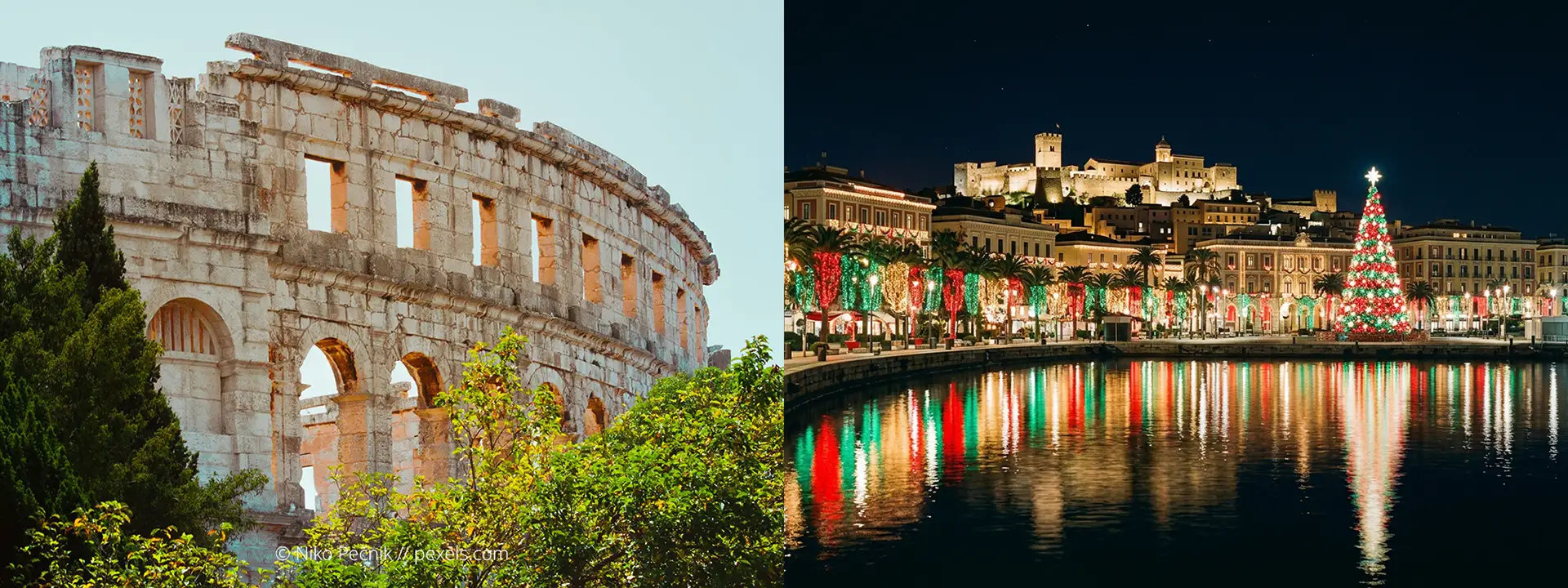
The Three Seas Expedition
3 intensive passage stages with tactical Italian stopovers in historic Otranto and Reggio di Calabria, finishing for Christmas in Cagliari.
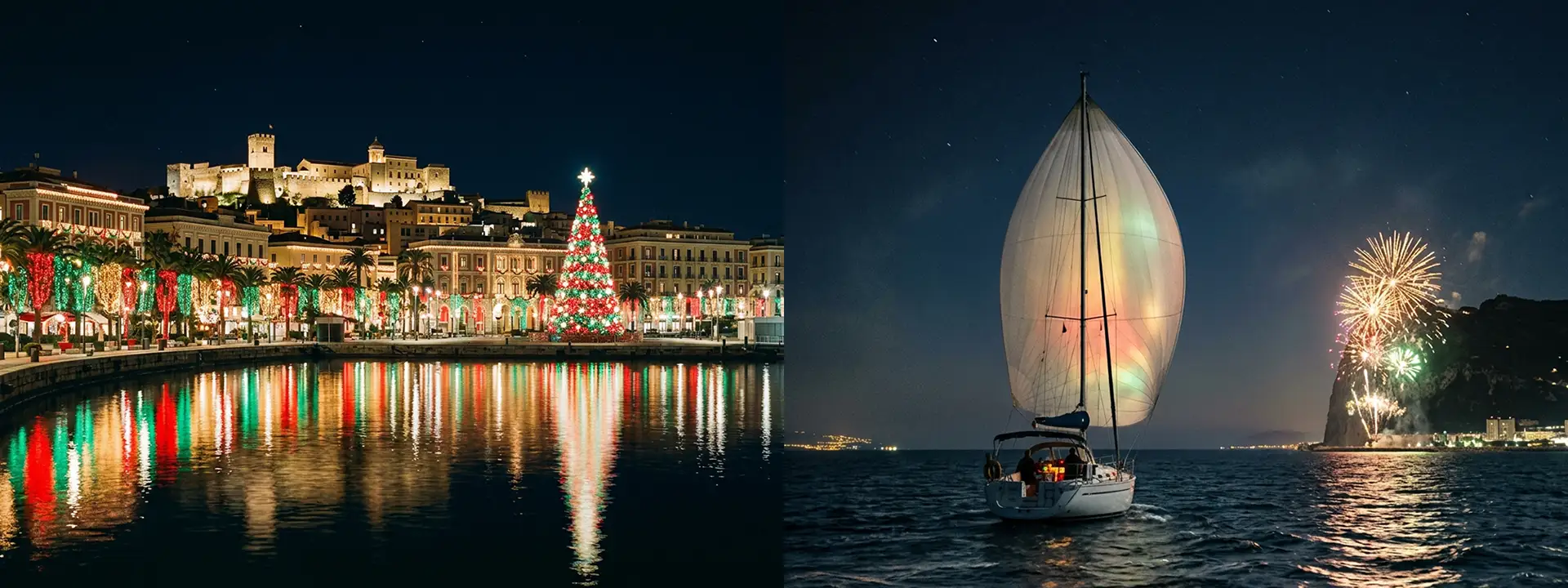
The Final Push Outwards
Beat westward across the open Western Med against winter lows and Atlantic inflow currents. Ring in the New Year beneath the Rock of Gibraltar.
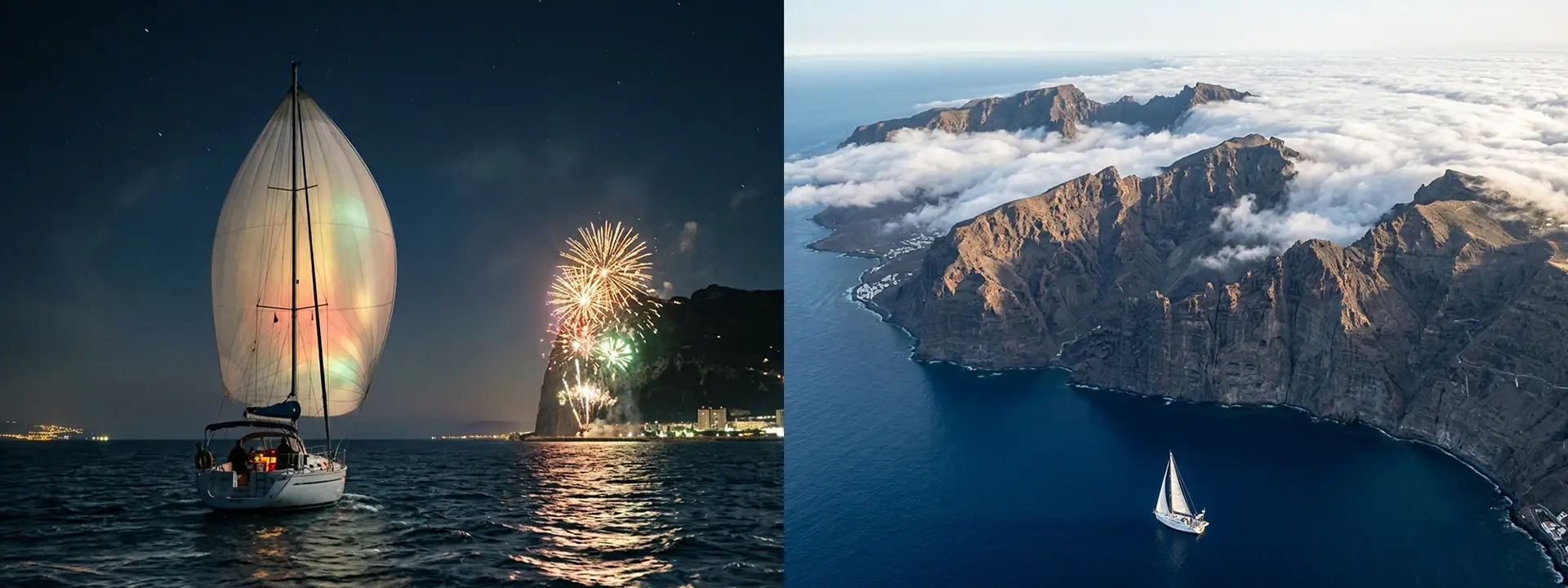
The Atlantic Threshold
Break out through the Strait into the open North Atlantic, surf long ocean swells down the African coast, and make landfall in the Canary Islands.